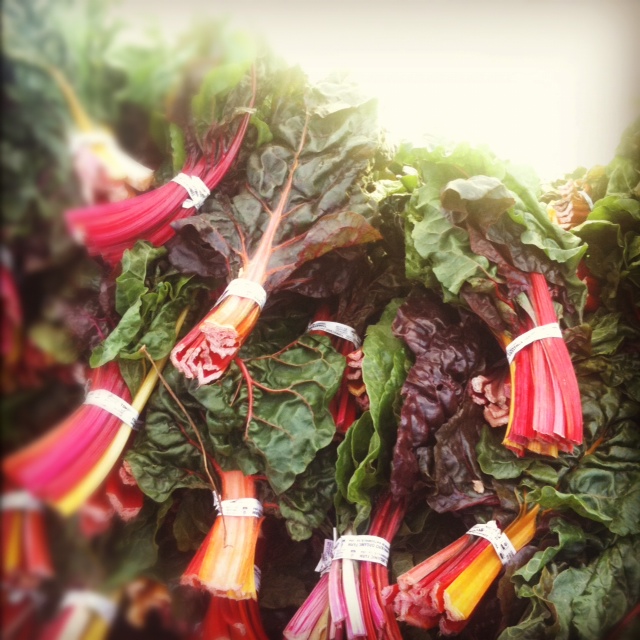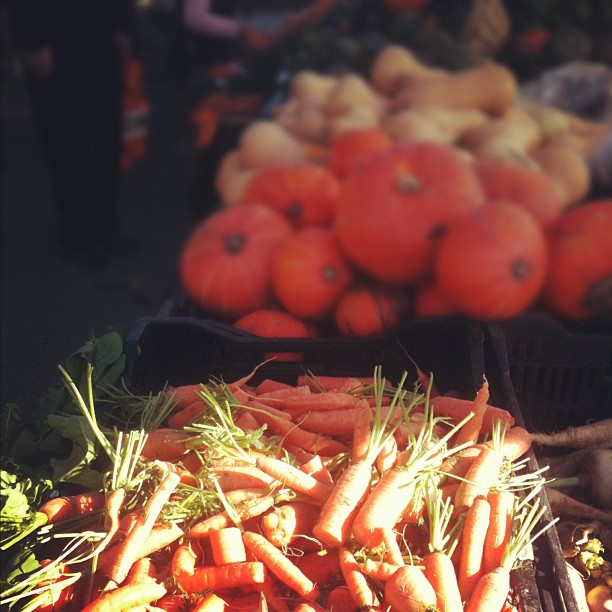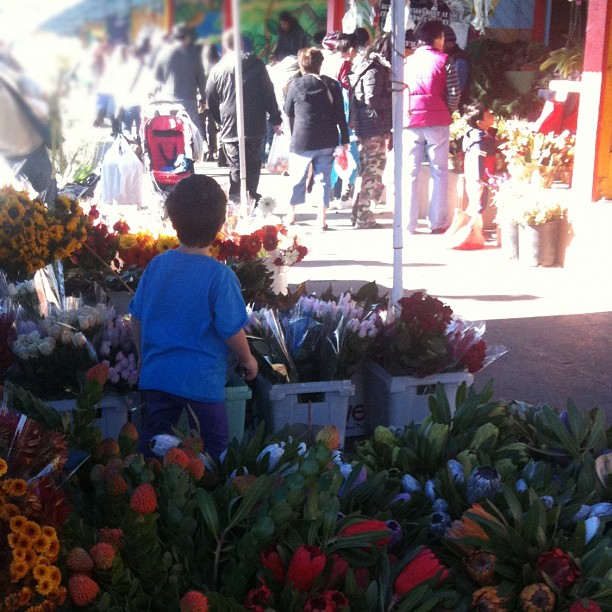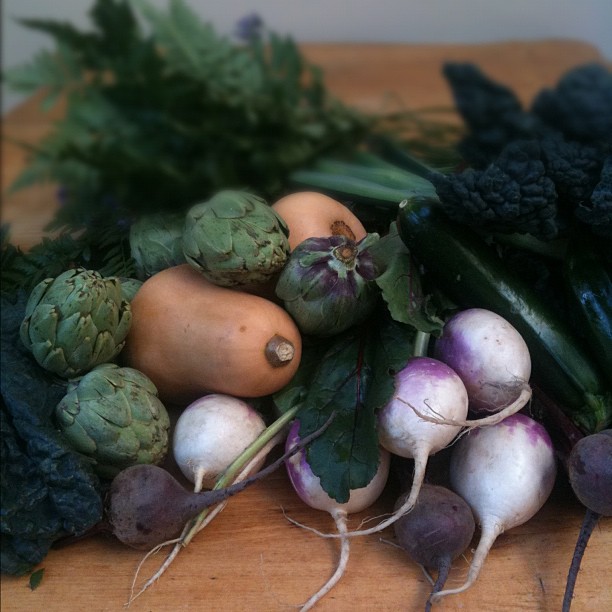
Our Saturday mornings, particularly in the late summer and fall, start with a trip to the Alemany Farmers Market.  Last Saturday the market had suddenly become rather sad –  the rich abundance of summer had all but vanished and the fruit and veggie selection had been reduced to, alas, fall produce.  We nonetheless managed to fill our baskets with organic beets, lacinato kale, swiss chard, turnips, leeks, squash, artichokes, and a few lingering summer tomatoes.

We like to shop at Alemany because it’s local to us, but also because its vendors and customers are really a reflection of the local population: Latino, East Asian, White, African American, and whoever-else (may I say the 99%). Not to mention that it’s far less costly (some might say less “elitist”) than the Ferry Building Farmers’ Market.

With a few “extras” in the form of artisan breads and tamales and chutneys in our basket, we move on to the Manila Oriental Market (MOM), excited at the prospect of the first crabs of the season.

The start of the crab season in San Francisco seems always the same: Delayed because of a dispute between the crabbers and the distributors about the price per pound. It is usually settled in a few days, but this year it went on past Thanksgiving, unforgivable in some circles.  Apparently the price to the crabbers has hardly gone up in 20 years. If this is the case, we’re with the crabbers.

Going to MOM is not like going to the Safeway. It is much more of a jostling, competitive crowd, but as our mission is to get the liveliest live crabs at the best price, we fit right in.  We leave with two 2+ pounders.

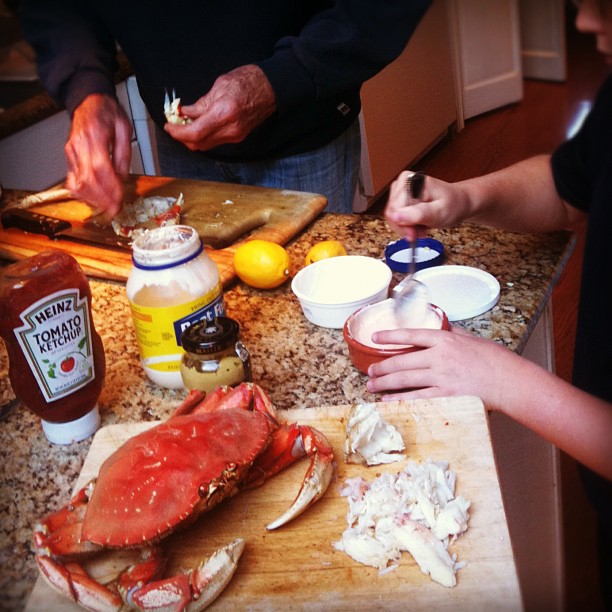
When we get home, our 9-year-old grandson is waiting, anxious to see if the crabs pass the liveliness test by pitting them against each other in the kitchen sink. They are then plunged into boiling water, and removed after 15 minutes. Once cooled, we crack them and remove their bounty.

Since he was four, Julian and Granddad have spent Saturday mornings during crab season buying, cooking and cracking crabs. But lately our grandson has shown less interest in the actual purchasing (he has other fish to fry) and really only plays a supervisory role, particularly in the preparation of the Louis sauce. I think this was the first thing he learned to make in the kitchen, and he took to it like a duck to water.  “Does this have too much lemon in it, Granny?  A bit more crème fraîche?” Inevitably, he always “tested” at least half of the sauce before it got to the table.

We serve the crab at room temperature, on a bed of lettuce, maybe tomatoes or cucumber or boiled eggs, and of course, the Louis Sauce.

Julian’s Louis Sauce 

 3/4 cup mayonnaise

1 tablespoon ketchup

1 teaspoon mustard

juice of 1/2 lemon

1/4 cup crème fraîche (optional)

Combine all ingredients by stirring well.

This dish is unusual, delicious, and simple to make.  It can easily be expanded for a bigger table.

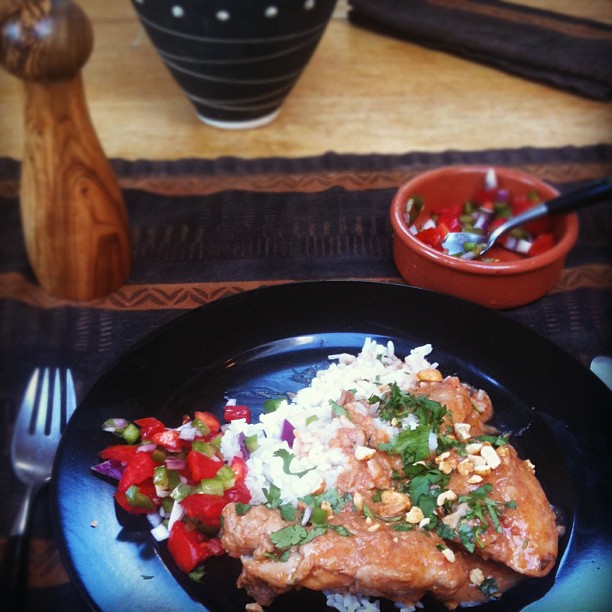
In West Africa, groundnut is the local name for peanut, and variations of this dish abound.  Some countries add veggies such as yams or cabbage, but I think this muddies the spicy peanut flavor.  It’s best made with thighs or legs which add to the richness of the sauce. You can use breasts, but you will need to shorten the cooking time by about half. Garnish with chopped peanuts and cilantro. We like to serve it with rice so the sauce can shine through. We also add a simple salad of chopped tomatoes, red onion, and green pepper (roughly equal amounts of each), salt to taste, and and a bit of minced green chili.

West African Chicken Groundnut Stew

Serves 4 – 6

Ingredients:

Vegetable oil (not olive)

4 chicken thighs (skinned, halved along the bone if large)

1 medium white onion, chopped fine

2 cloves garlic, chopped

2″ piece of fresh ginger, peeled  and grated

1/2 teaspoon cayenne pepper

1 cup canned tomatoes, chopped

1/2 cup peanut butter

1 cup chicken stock (or a stock cube dissolved in a cup of water)

2 tablespoons chopped cilantro

2 tablespoons chopped peanuts

Salt the chicken thighs and brown them in the oil on both sides, about five minutes.  Set aside.  Add the onions to the pan – use more oil if needed – and cook them until softened.  Add the garlic, ginger, cayenne and tomatoes.  Simmer until well blended.   Dissolve the peanut butter in the warmed chicken stock, add to the tomato mixture and bring to the boil.  Add the browned chicken pieces, then simmer gently for 45 minutes to an hour (about a half hour for breasts) until the chicken is cooked but not falling off the bone. Garnish with the cilantro and chopped peanuts and serve with plain boiled rice and the optional salad.


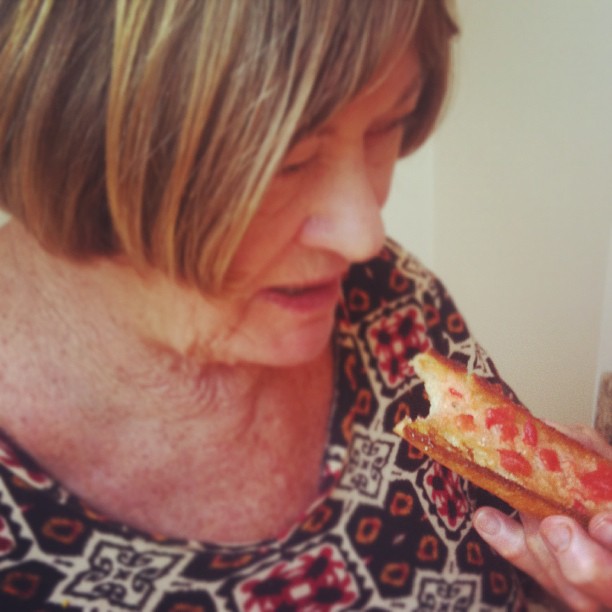
Antipasti, hors d’oeuvres, tapas, appetizers –  it doesn’t matter what language you’re cooking in, it’s always nice to have a few trusted standbys to serve with drinks, for a light lunch, or even a picnic. We’re quite spoiled living in San Francisco and Provence, being able to picnic and eat outside most of the year. Some of our favorites dishes are good for all these occasions: Grilled peppers with hard boiled egg and anchovies (or grilled peppers with just about anything), radis au beurre, Catalonian tomato bread, and a take on a Turkish eggplant dish, imam bayeldi. But let me stop there. No need to unleash all our favorites in one fell swoop.  And at this time of year with all its rich traditional food, it’s good every now and again to have something light and earthy, beyond the holiday mold.

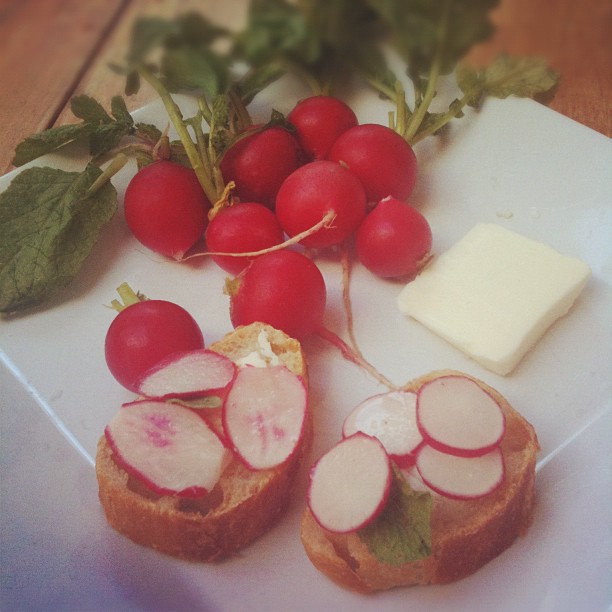
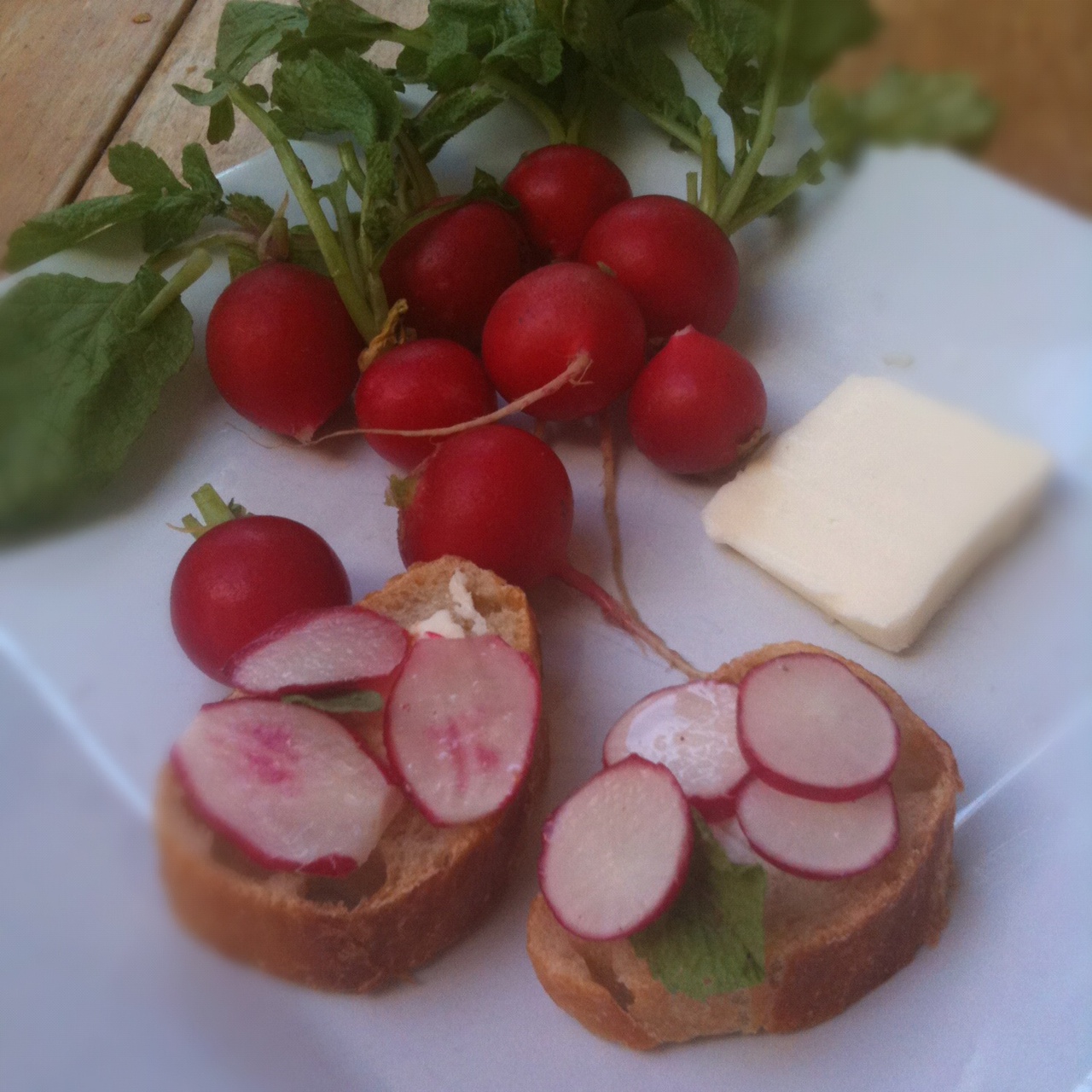
Radis au beurre

This is an appetizer much beloved by the French, usually served with a pre-dinner apéritif or glass of wine.

The easiest way to present them is to generously butter slices of baguette and to arrange sliced and salted radish on top (see picture). You can of course serve the radish, bread, butter and salt separately and let guests make their own.
Peppers with Eggs and Anchovies

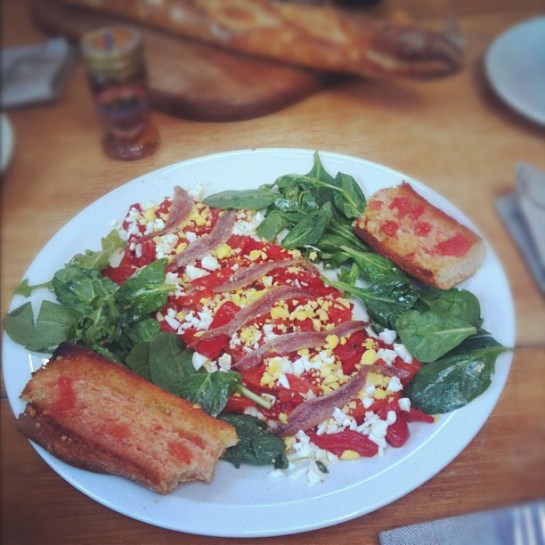
Peppers – red, maybe yellow, but definitely not green – grilled over a wood fire, under a broiler, or even on a gas burner and then peeled, dressed with your best olive oil, minced garlic and a drop or two of vinegar, is a purely sensual eating experience. If you’re doing them on the barbeque, you need to grill them whole until blackened (but not unrecognizable balls of charcoal). We mostly cook them in our toaster-oven close up under the broiler.  We find that instead of trying to grill them whole, it’s a lot simpler to lay them pointing away from you on the cutting board and more or less slice them into 3 pieces, leaving the seeds and center behind (trim off any white, inedible interior stuff). It also helps to have peppers that are not seriously deformed so that they present a smooth, flat surface. Broil on a foil-lined tray until most of the surface is blackened and blistered. You can then put them in a plastic bag, as most recipes suggest, but we find that if they’re blackened over most of their surface, the skins peel off easily as soon as they’re cool enough to handle.  Cut them into 1/4″ strips, add some good olive oil, some chopped garlic, a few drops of balsamic or red wine vinegar, salt and pepper and you’re all set.

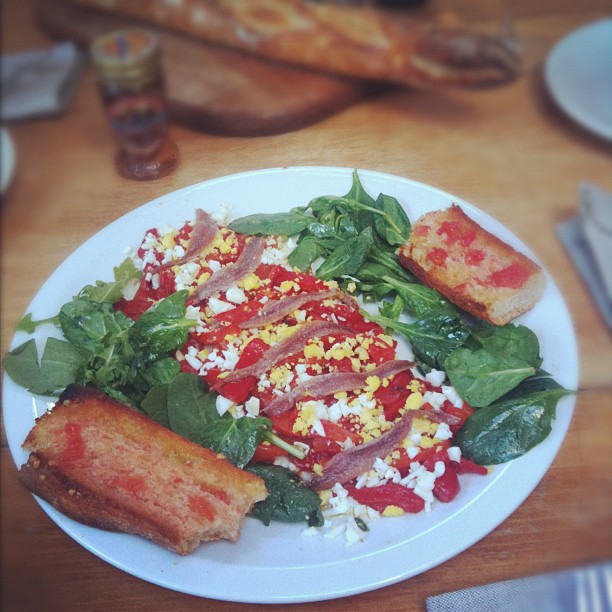
As to what you do with the peppers, you can hide them in the back of the fridge until they rot (as my husband, the pepper-cooker, often does), or they’re also great loaded onto bread or toast that has been spread generously with goat cheese. Our favorite way is to pile them in a dish (2-3 red peppers grilled and dressed as above) sprinkle them with the yolk and white of a hard-boiled egg chopped separately, and then criss-cross several anchovies on top. If you’re not fond of anchovies, you can always substitute capers and/or parsley. A nice addition is to surround them with dressed arugula. We’re always delighted at how complex such a simple dish tastes.

Pa Amb Tomàquet

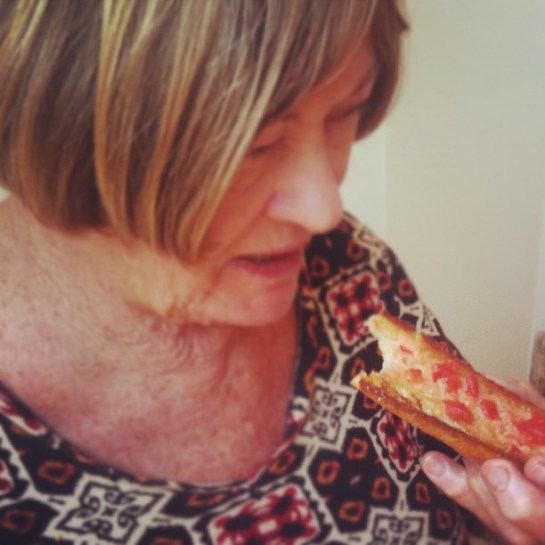
This is Catalan for bread with tomato. Ever-present in the tapas bars of Barcelona, it is so popular (and so good) that it is found far beyond Catalonia. There is a lot of deliberation about whether it should be oiled and toasted on both sides, whether it should be rubbed with garlic and whether it’s even worth doing when tomatoes are not at their summer ripest. Provided you can find a tomato that isn’t winter-tasteless, it’s worth trying at any time, particularly if you have some serrano (or any prosciutto-style) ham to serve it with.

Here’s how I make it: Cut a good quality baquette into about 6″ pieces and halve them. Rub lightly with garlic (optional, and easy to over do) and sprinkle with good olive oil. Broil until lightly browned. Cut your tomato in half and rub it into the toast, discarding the skin. Or you can first rub the tomato on a box grater, spreading the tomato on the bread, again discarding the skin. This is great with cured ham, with anchovies, or with the pepper salad above.
Turkish Eggplant Salad

The eggplant, or aubergine, is such a wonderfully versatile vegetable. It combines well with meat as in moussaka, with vegetables as in ratatouille, in purees and salads, and is much used in Indian and Chinese dishes. While I like to make caponata and baba ganouj, this Turkish salad is probably my very favorite.

The quantities below will make enough appetizer for at least 4, but it’s so good that you might want to double the recipe.

Ingredients:

1 large eggplant

Olive oil

1 medium onion, finely chopped

7 oz. canned diced tomatoes, or 2-3 peeled and chopped 

1 large clove garlic

1 tsp. cumin pounded

1/2 tsp. allspice

Salt, pinch cayenne

1 tbs. currants or yellow raisins

1 tbs. each chopped mint and parsley for garnish

Cut the eggplant, unpeeled, into 1/2″ cubes.  Put them in a colander, salt them, weigh them down with something heavy (I use my mortar) and leave to drain for at least 30 minutes to remove the bitter juices.

Dry them on paper towels.  I don’t like to fry eggplant as I think it absorbs too much oil, so I put the cubes on a foil-covered tray, toss them in about a tablespoon of olive oil, and broil them in the oven (or toaster oven)  until well cooked – this will take 10-15 minutes.  Undercooked eggplant is truly awful.

Meanwhile, fry the onion in a little olive oil over low heat about 5 minutes until softened.  Add the canned tomatoes, garlic, spices and currants or raisins and continue to cook until most of the liquid has been absorbed and your kitchen is filled with the wonderful smell of garlic, oil and spices.  

When the eggplant is well-cooked (have I made my point?) add it to the tomato mixture and continue to cook it for about 5 minutes until well blended.  Add the chopped mint and parsley and let cool.  Serve at room temperature with crusty bread or as part of a buffet with the above dishes.

**The peppers and eggplant dishes have been adapted from Simon Hopkinson’s charming book Roast Chicken and Other Stories.

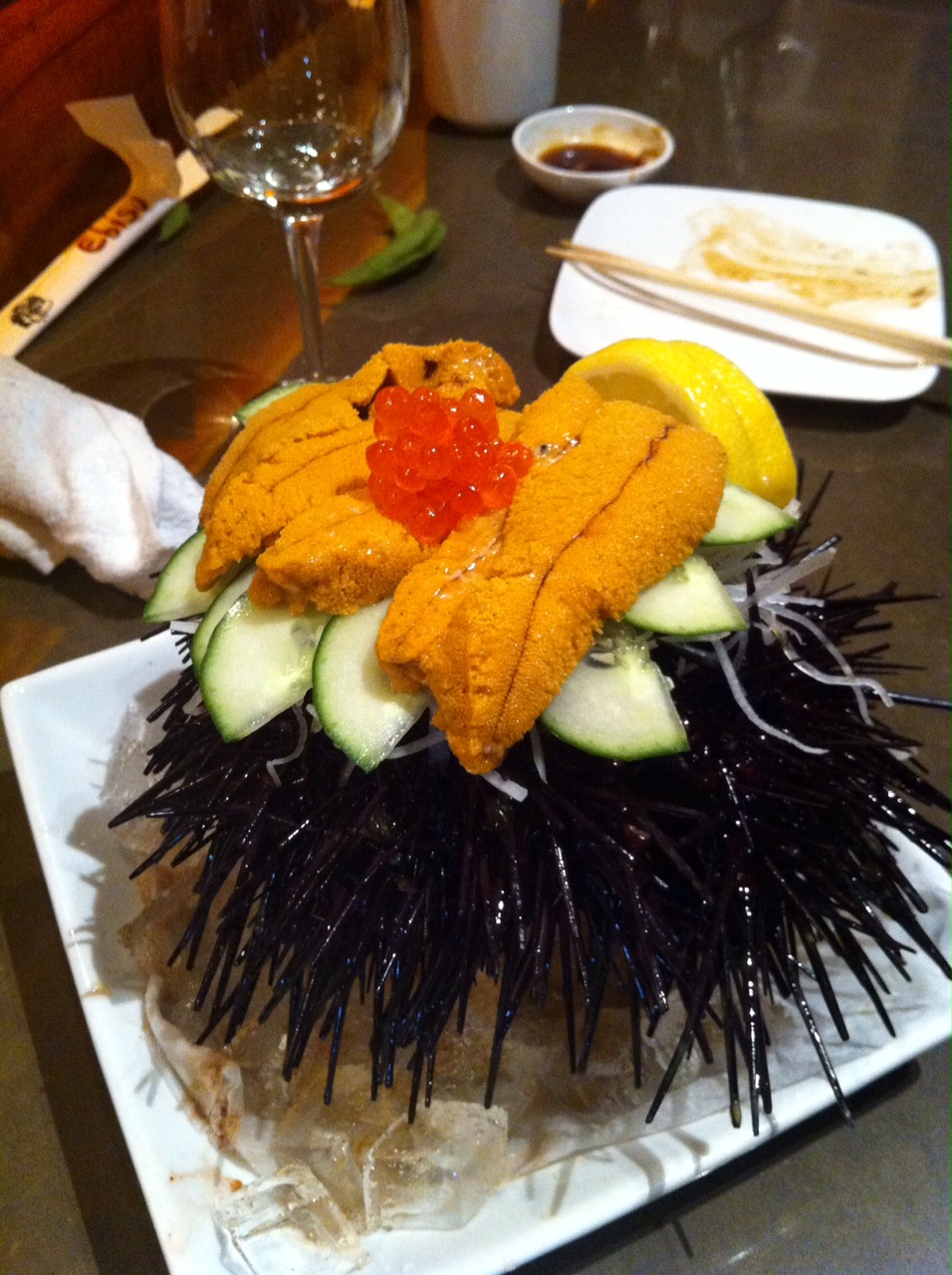
This picture we took at our favorite San Francisco sushi bar last weekend has inspired me to sing the praises of uni. The word is Japanese for the coral “roe” (actually the gonads) of a sea urchin – oursin in French, riccio in Italian, erizo in Spanish, all meaning hedgehog. I don’t volunteer this information to show off my language skills, but if you’re as passionate about uni as we are, you need to know it in many languages so you don’t miss it on your travels.

It’s one of those things like anchovies and oysters that people either love or hate. Count us among the lovers. Probably the best we ever had was in a coastal restaurant north of Valparaiso in Chile.  Good luck brought us there at the height of the season. There were huge mounds on offer, each one bigger than a softball – hefty, luscious, and cheap!

We eat them regularly in France, where they are in season during the cold months, but we’ve had them as far apart as Seville and Sicily at other times of the year. Our enthusiasm has led us to buy them several times at the market with less than stellar results in their preparation. Better, we’ve decided, to have them at a restaurant. In recent years uni has spread beyond the sushi bar into sauces, often for pasta, in trendy restaurants worldwide. Here in San Francisco, most come up from southern California, removed from the shell, cleaned and packed in little Japanese-style wooden trays. Occasionally, we get them as you see here – in their spiky shells live and fresh from Mendicino. How to describe the flavor?  Briny, sweet, buttery, rich. You think maybe this is the fois gras of the sea.  We like it best in a sushi handroll called a bakudan – rice, shisho leaf, ikura (salmon eggs) and hopefully a lot of uni. Divine!

My first encounter with a sea urchin was many years ago when I spent a summer on the Greek island of Spetsos. I had been swimming and sat on a rock in the water and inadvertently on a sea urchin that was clinging to it. Several of its spines pierced through my swimsuit, broke off and lodged in my bottom. They are impossible to remove. So they stayed with me, a very uncomfortable human pincushion, until they emerged one by one weeks later. In view of this, I suppose it’s surprising that I am so fond of these hazardous little critters but when it comes to the pleasures of eating, it’s easy to be forgiving.

So next time you’re at a sushi bar, try some uni. You’ll either love it or hate it.


As many of you probably know, San Francisco doesn’t have well-defined seasons. In fact, summer is often foggy, cold and windy. Although we are almost always rewarded with beautiful weather in the fall, it’s easy to reach a point – dare I say it – when you can’t face one more heirloom tomato salad or another picnic in the park, but instead long for a steaming bowl of minestrone or a civilized sit-down brunch.

Being creatures of habit, our Sunday brunch involves two constants: champagne, and eggs in some shape or form.

We  always kick off at noon with a glass of bubbly. Often it’s the real thing, but we are also partial to prosecco, cava, or any other methode champenoise, as long as it’s not sweet.  Sometimes we add a few drops of a fruit liquor, either creme de cassis, peach or raspberry.

Then an egg dish: Maybe a Spanish tortilla, a goat cheese souffle, huevos rancheros, or arguably the best of all: piperade.

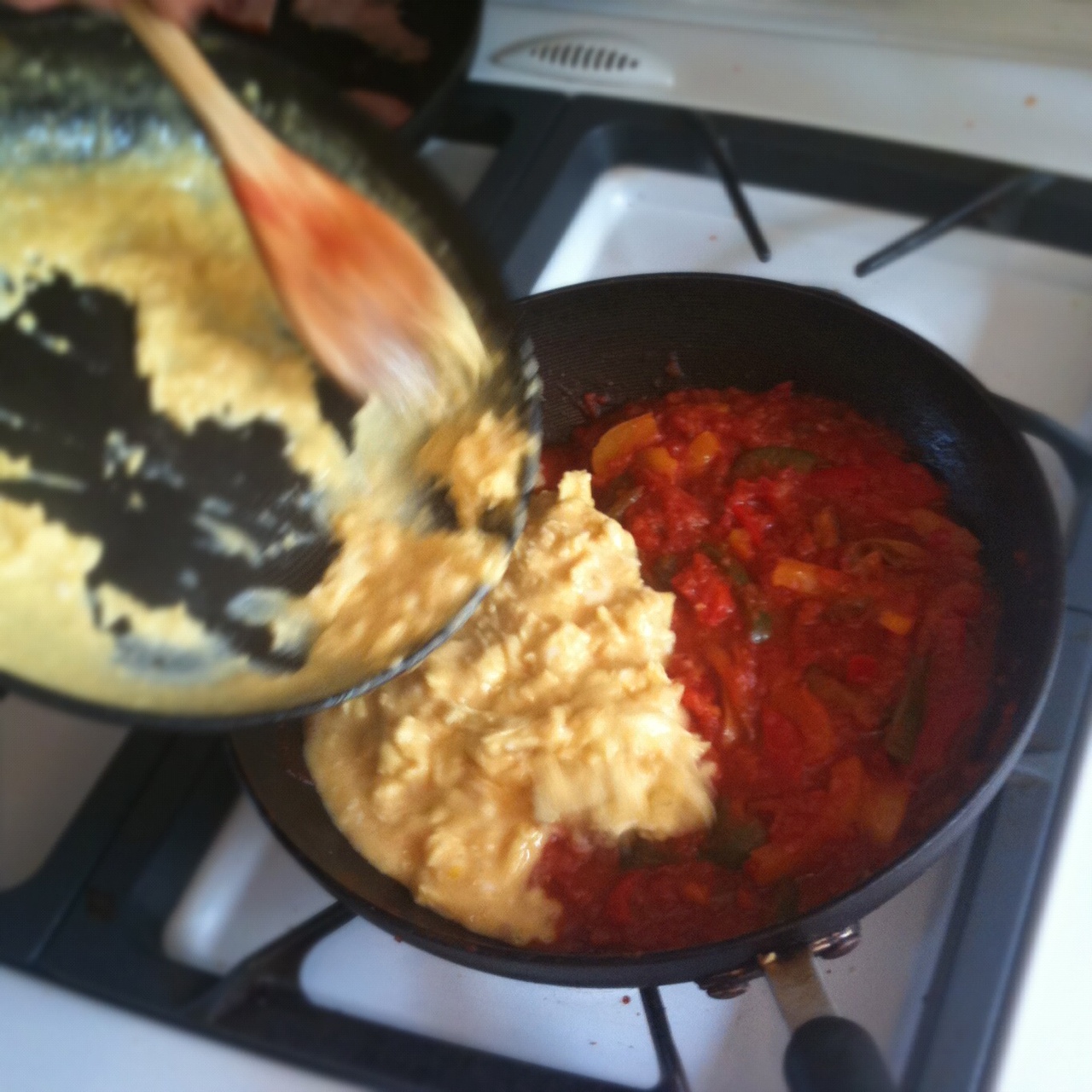
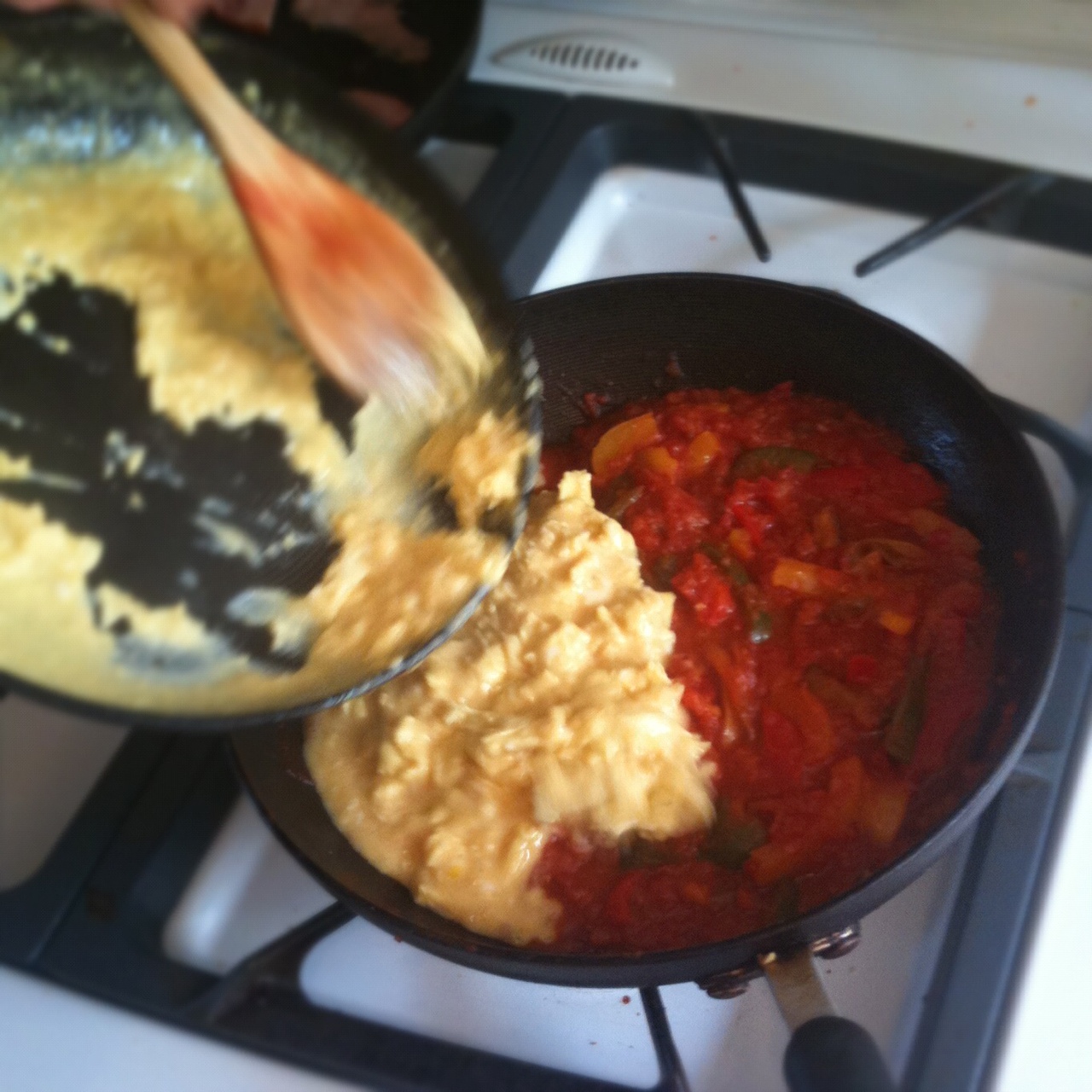
A popular Basque dish, piperade is a mixture of olive oil, onions, peppers, garlic and tomatoes combined with eggs.  Most recipes add the beaten eggs directly to the cooked pepper mixture but I think this is a mistake as it makes the eggs grainy and an unattractive pink color. Better to scramble the eggs slowly until half cooked and then tip them into the piperade. The heat will complete the cooking.

It’s a simple dish for two or four, but can easily be turned into a festive brunch for a half dozen or more. You would simply need to increase the pepper and egg mixture, add a garnish of ham and, if you want to be really decadent, some fried bread.  I like to serve it on a large platter with the piperade in the middle and the ham and fried bread round the edges. In the Basque country, they use jambon de Bayonne but you can substitute Canadian bacon or any similar slices of cured ham.  For the bread, cut thinnish slices of a baguette and fry them in oil until golden. They are so delicious they could even be worth the million extra calories.

Piperade

Serves 4

Ingredients:

4 tablespoons olive oil (plus more for the ham and bread)

1 large onion, chopped fine

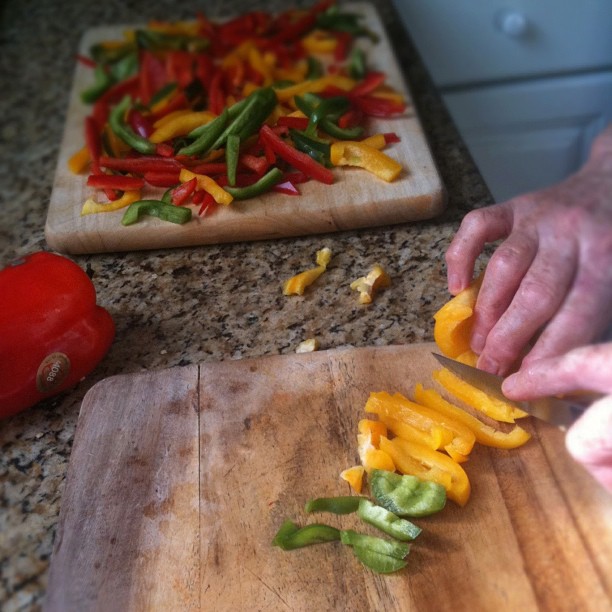
2 red, 1 green, 1 yellow pepper, cut into strips, 1″ x 1/2″

1 large clove garlic, chopped fine

3/4 of a  28-oz. can diced tomatoes (not in puree) 

8 eggs

Salt, a pinch of cayenne or piment d’Espelette

4 slices ham, about  4″ x 3″, cut in half        

8 slices of baguette, or other bread of your choice

Warm 3 tablespoons olive oil in a heavy-bottomed frying pan.  Add the onion and cook 5 minutes over low heat.  Add the peppers and cook a further 20 minutes.  Add the diced tomatoes and the garlic and continue to cook over low heat until nearly all the liquid has been absorbed and the peppers have softened but retain some bite.  Season with salt and a pinch of cayenne or piment d’Espelette.  In a separate (smaller) pan, heat the remaining tablespoon of olive oil over low heat and add the eggs, stirring, until large curds start to form.  Tip the eggs into the pepper mixture and stir briefly to incorporate.  The heat of the peppers will complete the cooking.  If you’re not planning to add the ham and fried bread, serve immediately with toast or French bread.

 If you’re going for broke, BEFORE cooking the eggs (which will require your undivided attention), and while the pepper mixture is simmering, fry the ham briefly until it starts to color.  Remove and drain on paper towels. Add a few more tablespoons of oil to the pan and fry the bread on one side until golden. Be careful, it can go from golden to burnt in a flash. Turn the bread over, add a bit more oil if necessary and repeat the process. Keep the ham and bread warm while you cook the eggs. Put the egg and pepper mixture in the center of a large platter and arrange the ham and fried bread around the perimeter. 

This is a common dish in the Basque country, such a wonderful place to visit. Tucked into where the north-east corner of Spain and the southwest corner of France meet the Atlantic, it has a character, culture and language all of its own. Lively San Sebastian, famous for its many Michelin-starred restaurants, has a charming old town great for bar-hopping and for sampling the local tapas (called pintxos) – arguably the best in Spain. The Guggenheim museum in Bilbao with its mindblowing architecture is worth a trans-Atlantic voyage. The colorful fishing villages along the coast and the picturesque towns that dot the emerald green foothills of the Pyrenees have a charm all their own, and some of the best food you’ll find anywhere.

If a trip there is not in your immediate plans, perhaps a helping of piperade will whet your appetite.

Sam adds: A few years ago I discovered for myself the art of cooking bell peppers: Patience. If you have patience, you can turn out deliciously sauteed peppers every time simply by keeping the heat low in the pan and giving them time to soften slowly in oil. They’re a wonderful thing to know how to make because you can add them to so many things. Two of my favorites: toasted baguette spread with goat cheese and piled high with sauteed red peppers, and sausage and peppers served over pasta. Though I’ve been eating my mom’s piperade for decades, I’ve never attempted to make it myself before last weekend. I was happily surprised to find that it’s much easier to make than I imagined. Essentially it’s simply combining two things I already have a pretty good handle on: sauteed peppers & scrambled eggs. The fried bread, in my opinion, is mandatory when making this dish.

Today we had an amazing, simple lunch on the patio.  Even though we’re into November, this is about as close to a perfect Summer day as we get in San Francisco: Blue skies, 70-odd degrees with just a slight hint in the air of Fall to come.

This morning while passing through the UCSF hospital after an appointment  we came upon a Farmer’s Market right there in the lobby  (only in San Francisco, you might say, and apparently only on Wednesdays). Crates of beautiful veggies, all organic and bursting with freshness. We swooped on the heirloom tomatoes, big bunches of basil and coriander, baby new potatoes, green beans and, best of all, ears of corn picked this morning, the vendor assured us.

We raced home to throw the corn on the stove and made some of our favorite coriander butter in the pestle and mortar to douse it with. (It’s very easy to make: Pound 1/4 cup of coriander with a large pinch of salt to form a paste, then add 1 oz. of butter and keep pounding until it’s a lovely green and easy to spread. If you like it spicy, add a few drops of the bright green Chile Habanero sauce which you can find at most supermarkets.) We sliced up a few of the perfectly ripe tomatoes – not squishy as Heirlooms often are – anointed them with basil, a splash of our olive oil from Provence, a smidgeon of balsamic vinegar, salt and pepper, and dug out the last of the chevre we’d brought back from France and plopped in the middle of the plate. With some crusty bread to mop up the juices, we toasted the end of summer with a crisp glass of Sauvignon Blanc.

The rest of the basil was of course perfect to make pesto for our favorite pasta dish from Genoa. A local pasta called trenette is mixed with baby new potatoes, either just boiled or par-boiled and fried until a bit crisp in olive oil, cooked green beans, as much pesto as you think you need, and lots of Parmesan. Although it might seem odd to add potatoes to pasta, the different textures work wonderfully. This is a very old dish – it was eaten by Ligurian monks in the 15th century as a Lenten dish – which has become quite popular lately. However, in most recipes I read, the pasta, potatoes and beans are cooked in one pot and I think trying to get everything to come out cooked just right is way too difficult. It’s not much more trouble to cook things separately and better results are assured.

As for the pesto, I love to make it in the pestle and mortar (yes, I’m a P & M freak!) because the flavor and texture are better, but if you don’t have one, the food processor does a perfectly acceptable job. I don’t put pine nuts in this pesto because I don’t think they add to it, but of course you can if you’re so inclined. I also add the parmesan separately, grating it on top of each serving at the table.

Pasta Pesto with New Potatoes and Green Beans

Serves 4

Ingredients:

3/4 lb. linguine, spaghetti, or pasta of your choice

12 baby new potatoes (preferably red) 

1/2 lb. green beans

2 packed cups basil, large stems removed

1 large clove garlic

salt, pepper, olive oil, parmesan

Make the pesto: Either pound the basil, salt and garlic in a pestle and mortar to form a paste and then add enough olive oil (about 6  or 7 tablespoons) to make a thick emulsion, or do the same in the food processor without letting the pesto become too smooth.

Bring a pot of water to the boil, add the potatoes and cook until almost done (about 15 minutes), or until fully cooked if you don’t plan on frying them. Drain. Cut the potatoes in half  and  fry them in olive oil on medium-high heat until brown and crisp.

In a separate pot of boiling water, cook the beans uncovered (to preserve their color). Cooking time will depend on how large and fresh the beans are, but 5-8 minutes should do it. Drain.

In the meantime, cook the pasta in plenty of salted boiling water, according to the package instructions.  (I find that although we like our pasta al dente, packaged pasta instructions generally underestimate the cooking time by about 2 minutes.) Drain well.

Finally, put the beans, potatoes and pasta in your serving dish, add the pesto, and mix together well. Allow each person to grate fresh parmesan and pepper on top as they like.  Enjoy!

Sam adds: I make this dish often because it’s so easy and is the favorite of more than one of us. I always fry the potatoes (never just boil them) and I like to add extra pesto and veggies to the mix. For example, I would add 3/4 lb. of beans, 16 potatoes, and 3 cups of basil.  (Of course if you up the basil to 3 cups, you’ll have to adjust your olive oil and garlic accordingly: 8-10 tbsp. of oil and 1 1/2 cloves of garlic.)